Small stories from Arusha 7
Bittersweet and Uplifting Moments
The final day of the two-week mentor training took place on Friday, March 21st. It had truly been an intensive crash course on the use of digital technology applications. Now, it’s up to the mentors to start using the tools right away, so the lessons from the training won’t fade away.
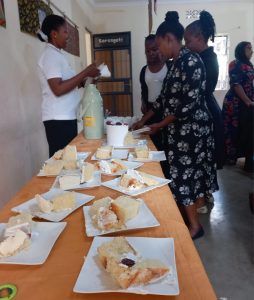
We had coffee, enjoyed cake, praised the participants, praised the trainers, and praised the training itself. And of course, certificates were handed out.
The next step is now in the hands of the mentors — as well as the project coordinator and training coordinator based in Arusha: supporting and encouraging teachers to make use of digital technology in their own schools.
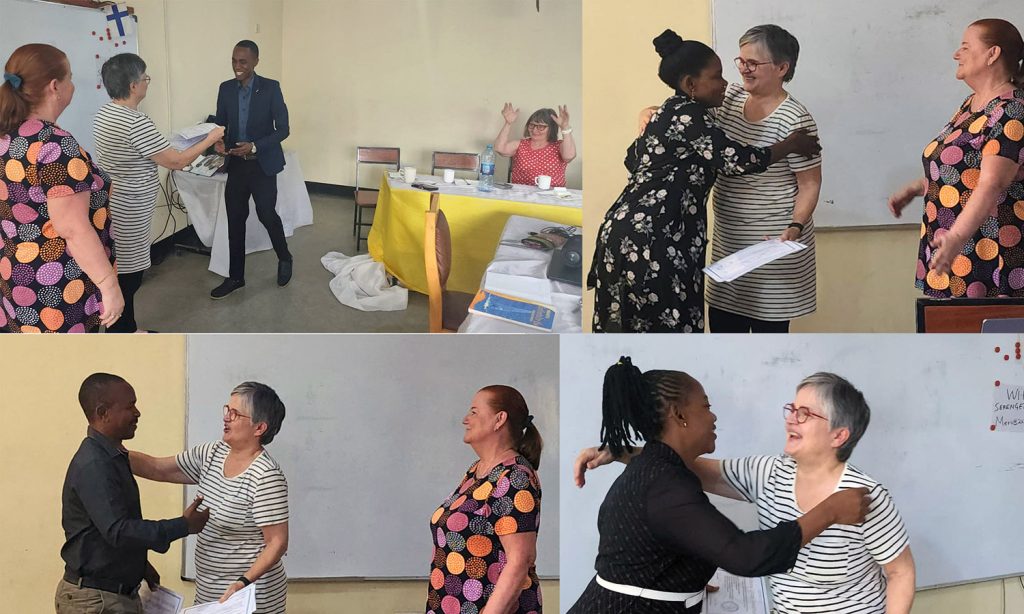
Photo: Certificate ceremony: Aino, Eva, Samwel, Liisa, Sunday, Gabriel, and Rehema
The Arusha project has stirred many questions and thoughts in my mind. Many Finns feel that “we should first help the poor in Finland before wasting money elsewhere.”
But when you’re here in Tanzania—or in other developing countries I’ve visited—the level of poverty is so much deeper that no poor person in Finland could ever compare.
Support given to developing countries (when it is sensible, well-monitored, etc.) does not take anything away from the poor in Finland. And with just ten euros in Tanzania, for example, you can achieve far more than you ever could with the same amount in Finland.
To School – and to Eat
The FSEA projects have focused on improving education, which has consistently proven to be one of the most effective ways to reduce poverty—especially the education of women. But going to school is not a given, especially in Maasai villages. Even today, not every child in Tanzania attends school, and children with disabilities are even less likely to do so.
One important finding from FSEA’s work in Maasai areas is that school meals doubled the number of attending students. Learning is difficult on an empty stomach—a fact that has also been the basis for Finland’s school meal program, established in 1948.
FSEA’s projects have supported the use of digital technology in the education of deaf and hard-of-hearing children and youth. The project team, Eva and Antti, have arranged laptops and other resources, and real results have been seen. It has been deeply moving to see that deaf students from Meru School are now actually employed. Of course, these good results have required much more than just computers: teacher training, electricity (!), internet access, and support staff. It has also required a strong foundation of networking and cooperation with local government. One clear sign of the project’s credibility was that, during the two weeks of training, several representatives from the local government came to observe the sessions.
When I interviewed the mentors, one of them expressed hope that these projects could serve as models for other schools and regions. I don’t know enough about the administrative structures in Tanzania to say whether that could truly happen. My experience from Finland in the 1990s doesn’t fully support the idea. Schools that received extra resources continued to develop well, but other schools would have needed different kinds of support—not just examples. One can only hope that the local government will be the one to provide all schools with the support they need—laptops, teacher training, internet connectivity, and cultural change in teaching. After all, changing a Tanzanian teacher’s mindset may not be any easier than changing a Finnish one.
Volunteers often find joy and a sense of meaning through their participation (as shown, for example, in Citizen Arena’s 2022 Volunteer Survey). For me, this month of volunteering has been unforgettable in many ways. The work itself is meaningful. Even if you can’t save everyone, you can do your part—as Antti Komulainen, one of the project leaders, put it.
Tanzania and Arusha have been new acquaintances for me, and somehow I want to believe in Tanzania’s development—even here, low-interest loans from China have helped. It has been truly wonderful to get to know the dedicated FSEA team in Arusha, the teachers, interpreters, Christopher, and Hillary.
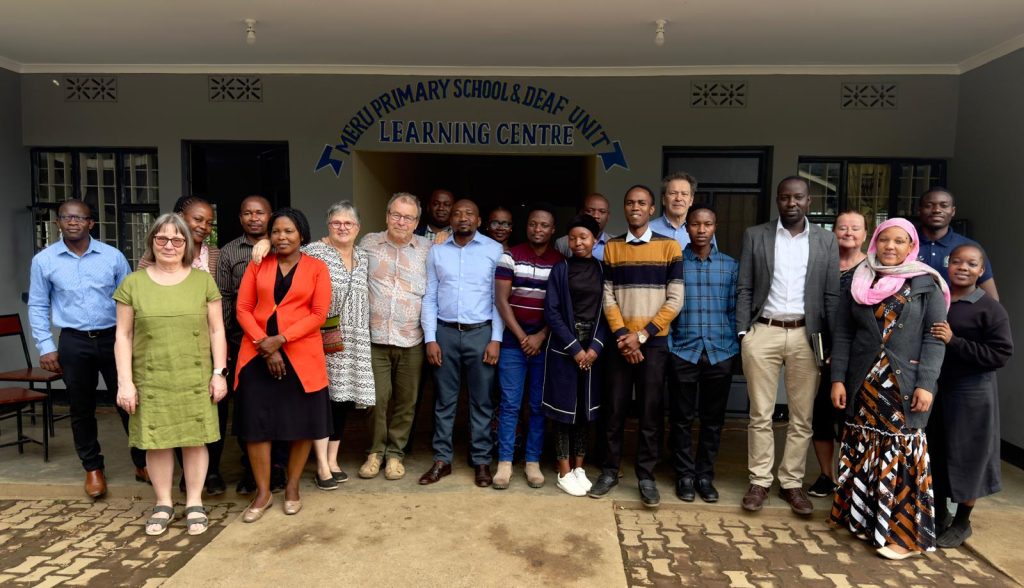
Photo: Mentor trainees, trainers, and local FSE staff
A heartfelt welcome warms the soul for a long time! Thank you for this month.
Liisa Ilomäki