HARVEST TIME IN FINLAND AND TANZANIA
In August 2026, it is harvest time in the kitchen garden at Patandi Maalum Secondary School in Akheri, Tanzania. Students are harvesting vegetables such as kale, cabbage, carrots and tomatoes. The produce from the school garden adds variety and nutritional value to school meals, while the students also have an opportunity to practise selling produce at the market in Tengeru. This year, the garden produced its first substantial harvest.
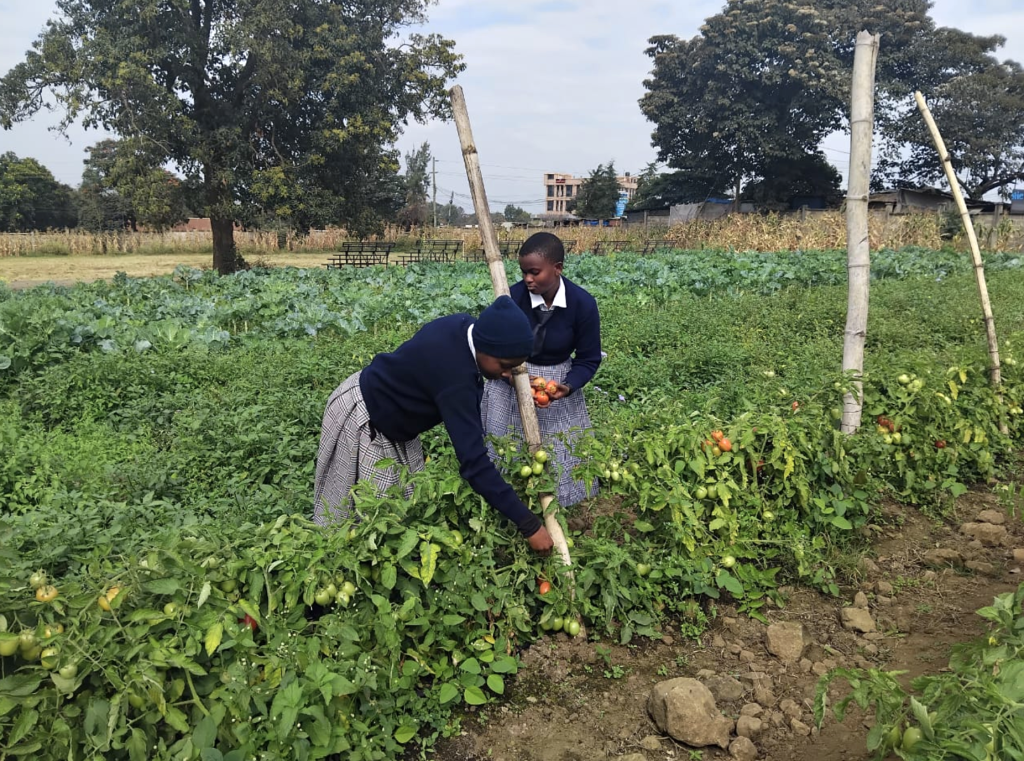
Students harvesting tomatoes in a school garden with a variety of vegetables growing around them.
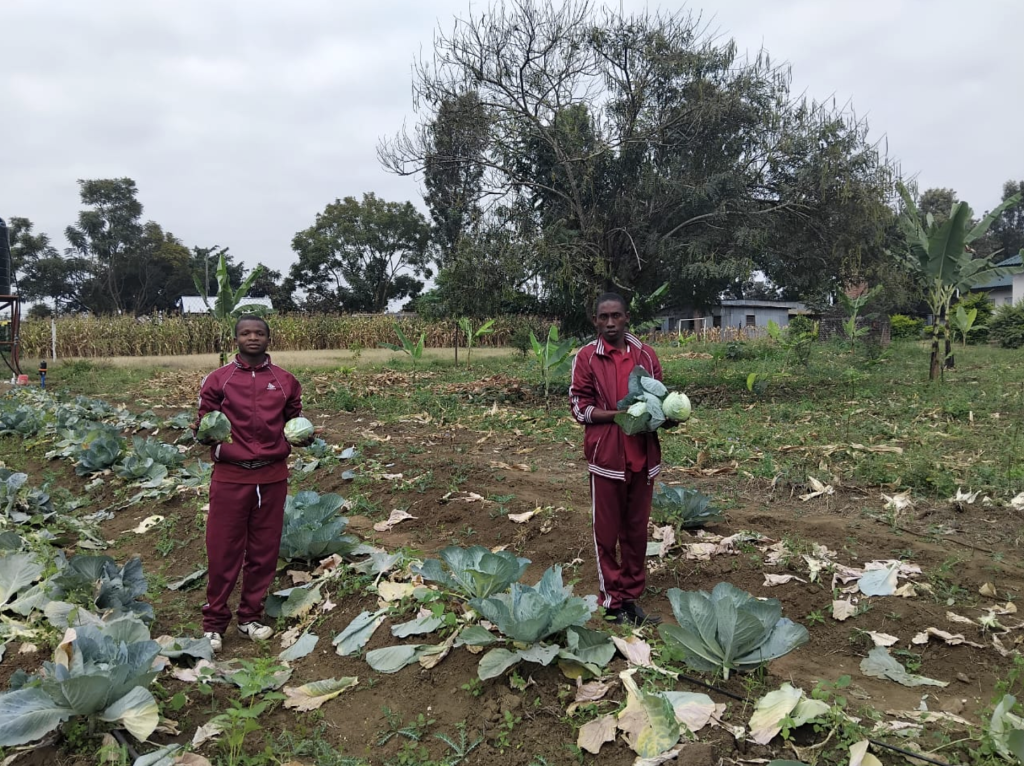
Two students at Patandi School show freshly harvested cabbages in the school kitchen garden.
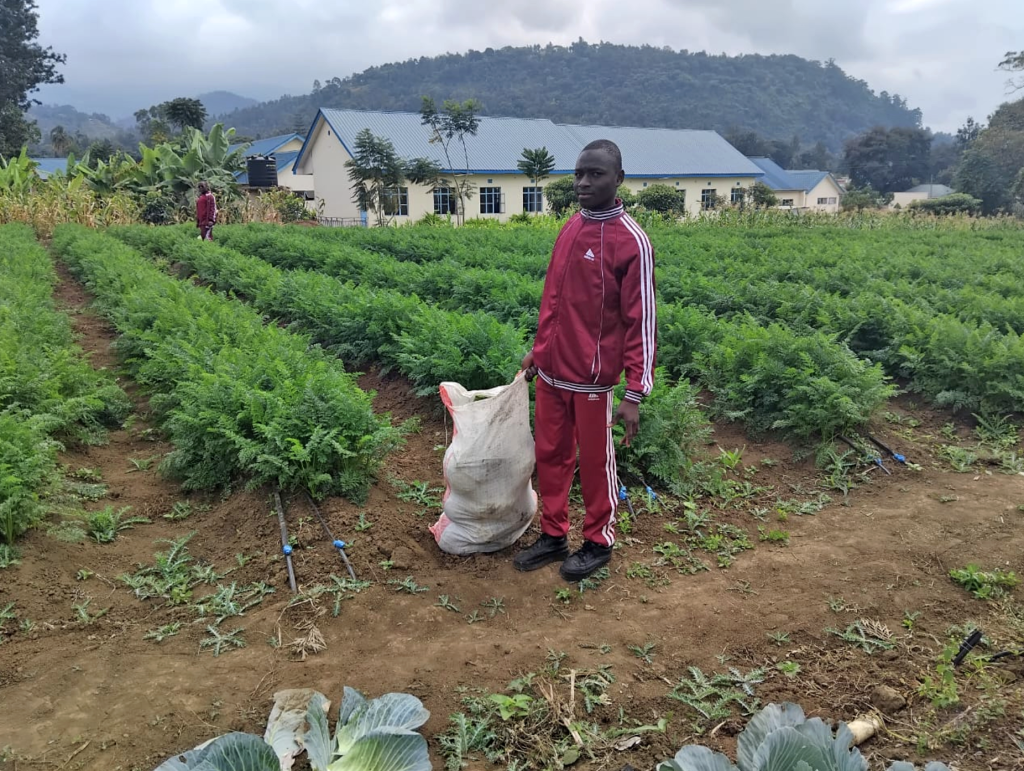
A student at Patandi School stands in the carrot field during harvest with a sack beside him.
The kitchen garden at Patandi is part of our Arusha, Especially! project and is an example of cooperation between Finnish development organisations working in the Arusha region. Planning began already during the project application stage, when both FSE and FFD (Food and Forests Development Finland) applied separately for project funding related to establishing the kitchen garden. FFD is a Finnish expert organisation that supports agricultural and forestry producer organisations and cooperatives in developing countries.
TAHA (Tanzania Horticultural Association), operating in Tanzania, is a partner of FFD, and the kitchen garden is part of the SENSOR project, which provides guidance on Good Agricultural Practices (GAP) and nutrition.
The Patandi kitchen garden was established with the support of two Finnish organizations—FFD and FSE—which joined forces for the initiative.
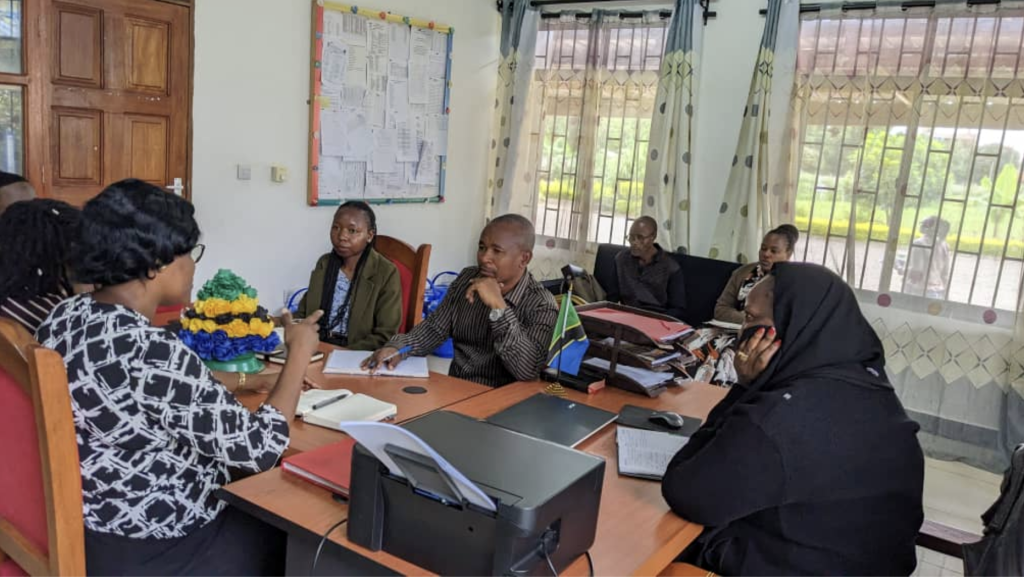
Planning meeting for the kitchen garden in the headteacher’s office at Patandi Maalum Secondary School.
Establishing a kitchen garden on an empty piece of school land has required a great deal of planning and practical work from the Tanzanian partners responsible for the project. Even before the project application was submitted, in 2023, the Finnish partners made sure that the soil at Patandi was suitable for cultivation. A soil analysis was carried out on the school grounds, confirming that the land was suitable for growing crops.
Planning and preparing the kitchen garden involved several demanding stages and investments. The soil was prepared by ploughing and creating terraces to optimise the irrigation system. Water tanks, an irrigation system and solar panels were installed at the school to enable the use of a water pump.
The planning and construction were completed in November 2025, when the students were also able to begin planting seedlings. Although water is available in the Meru area, unlike in many other parts of Tanzania, the irrigation system ensures that the plants receive sufficient water throughout the growing season.
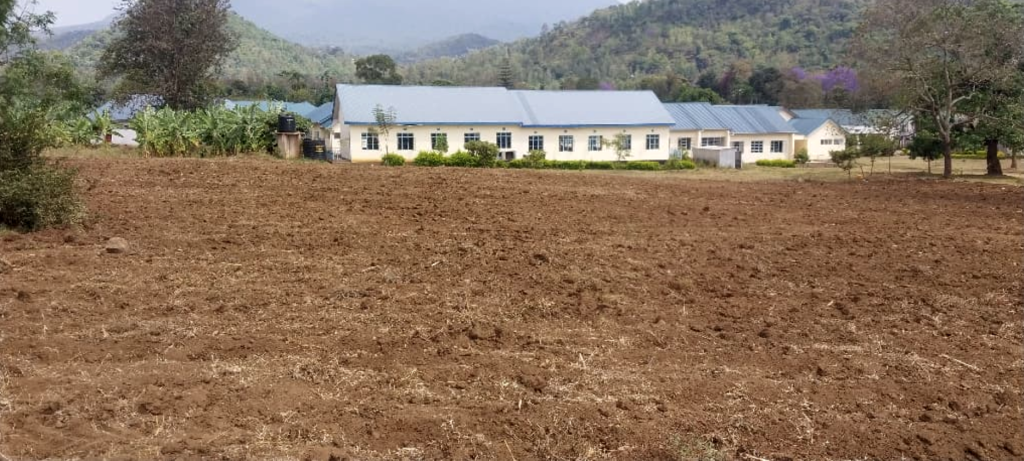
Cultivated land prepared for the kitchen garden at Patandi School, with school buildings and green hills in the background.
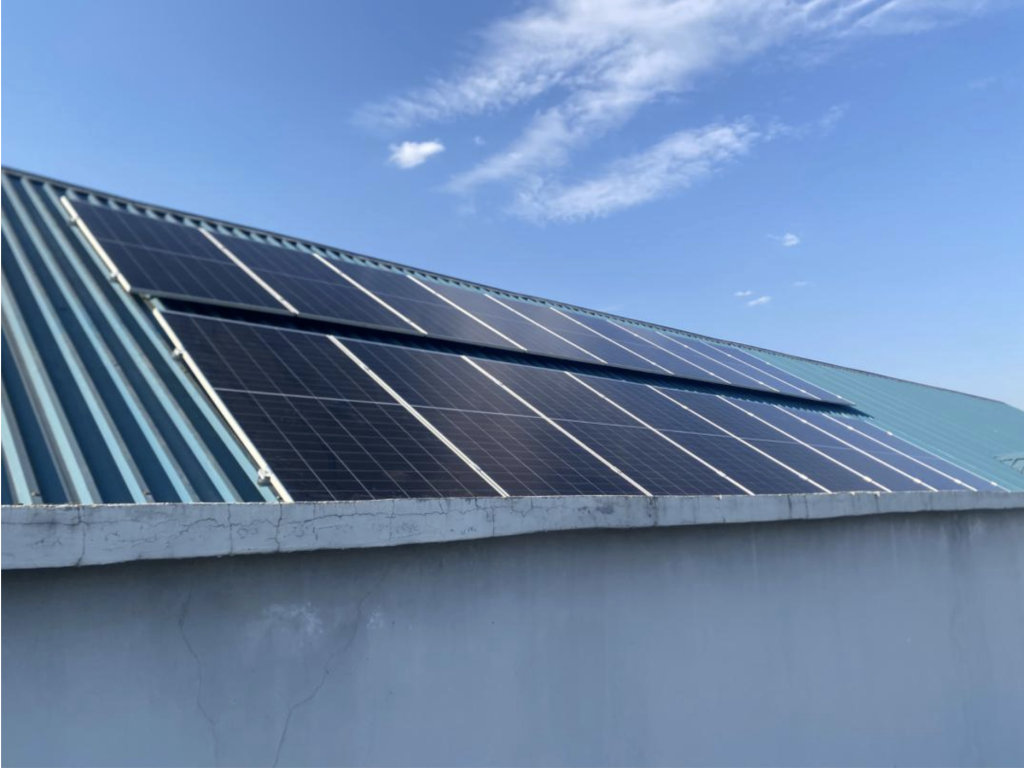
Solar panels installed on a roof at Patandi School provide electricity for the kitchen garden’s water pump.
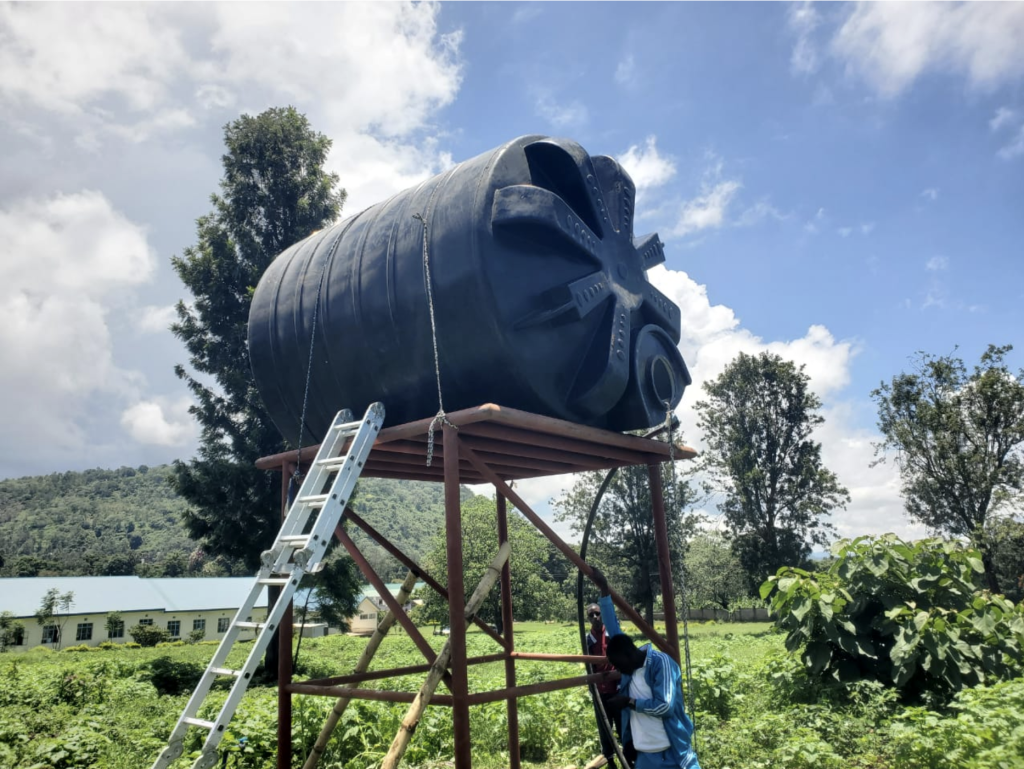
A large water tank on a raised platform, forming part of the irrigation system for Patandi School’s kitchen garden.
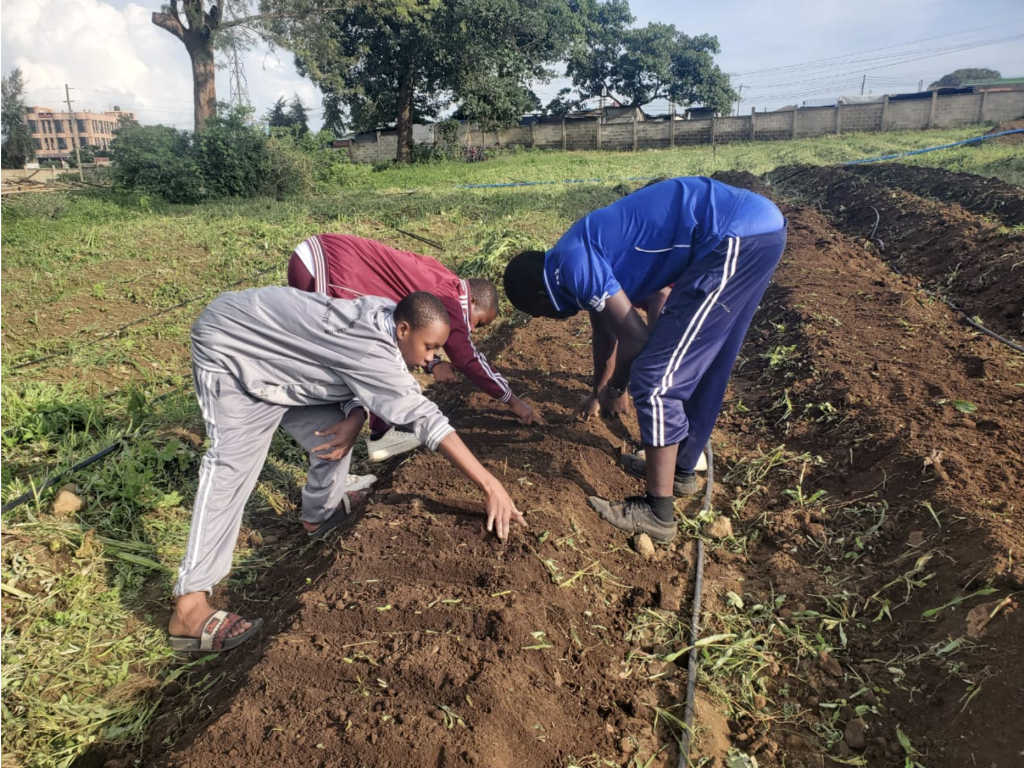
Students at Patandi School work together preparing planting beds in the school kitchen garden.
During the first project year, before the kitchen garden was established, maize was grown on the site. Maize can contribute to soil improvement as part of mixed cropping and crop rotation. Its cultivation can help improve soil structure, reduce erosion and improve water infiltration in dry soil.
This year, the kitchen garden has produced its first harvest of vegetables familiar to us in Finland, including kale, peppers, aubergines, tomatoes and cabbage. Less familiar to Finns, but commonly used in Africa, are amaranth (mchicha) and African nightshade. Both are used in a similar way to spinach, and sautéed leafy greens are a common accompaniment to many Tanzanian dishes.
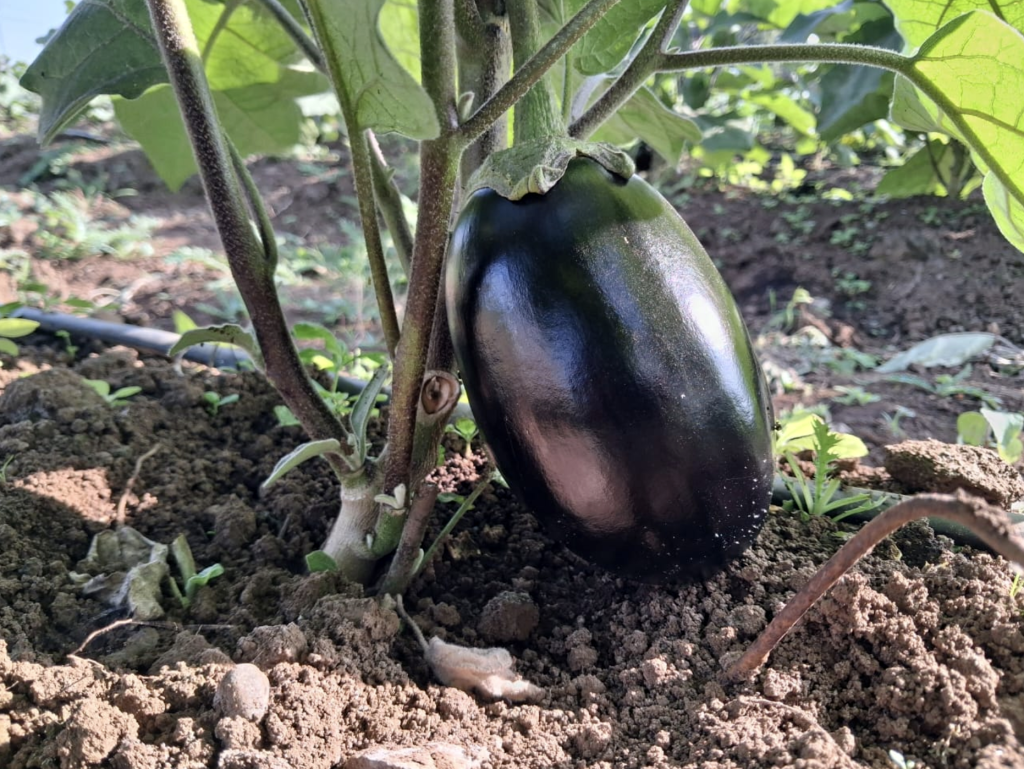
A ripe aubergine growing in the kitchen garden at Patandi School.
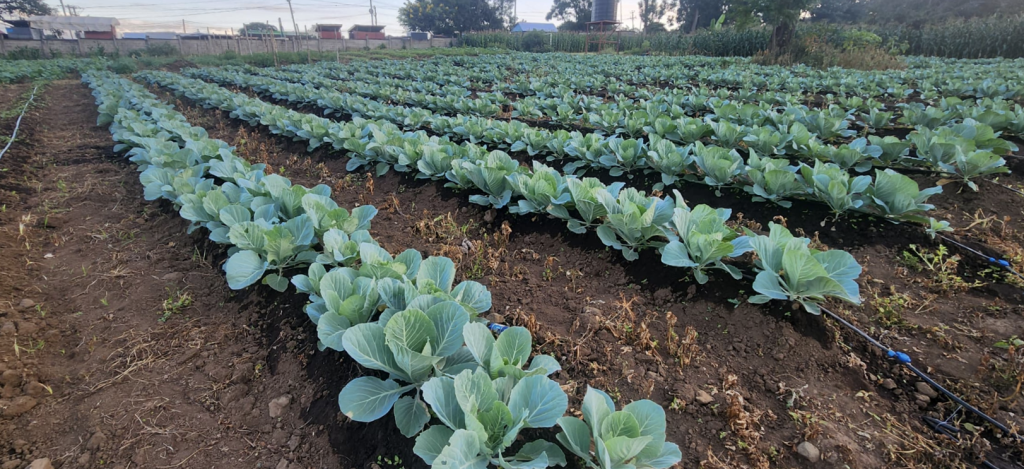
Rows of cabbages in the kitchen garden at Patandi School, irrigated with a drip irrigation system.
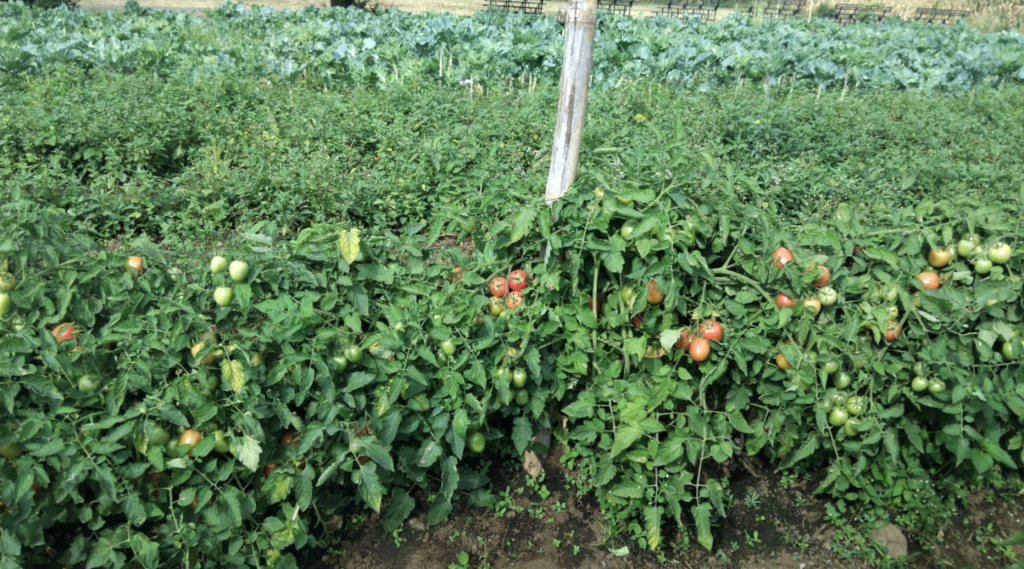
Tomato plants with abundant green and ripening tomatoes in the kitchen garden at Patandi School.
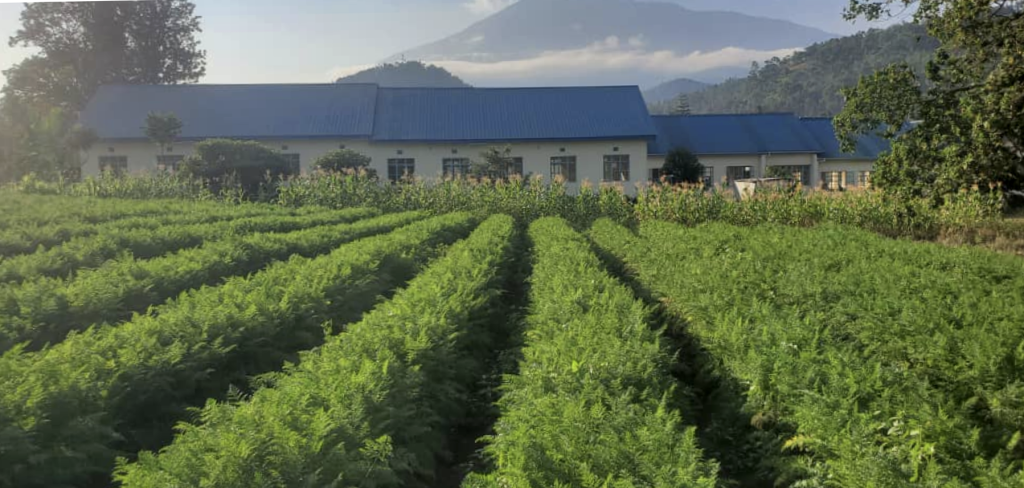
Lush rows of carrots in the kitchen garden at Patandi School, with school buildings and mountains in the background.
In Patandi Mr. Gabriel Jerome, a mentor teacher at Patandi school and the contact person for the school garden initiatives has organized new learning opportunities for students.
Mr. Zacharia Kiputa, TAHA’s SENSOR Project Coordinator, has led this technical work on the ground, guiding the planning of the kitchen garden and promoting the project at the school.
Additionally, practical training on nutrition, balanced diets and value addition has been provided by Ms. Jackline Maramoko, TAHA’s Gender and Nutrition Coordinator.
All the work has been carried out in close collaboration with Patandi’s headmaster, Ms. Janeth Mollel, and At FFD, Ms. Elianchea Shang’a, a climate and sustainable development specialist, has been responsible for overall project management, working with all partners in this initiative.
Ms.Dinga Massawe, a representative of the Meru District Agriculture, Livestock and Fisheries Office (DALFO) has provided strong official support for the project and committed to close cooperation. FSE Tanzania Country Coordinator Miss.Nossim Aloynce and Training Coordinators Miss. Mary Peters and Ms. Lydia Kimaro have contributed FSE’s expertise to the collaboration.
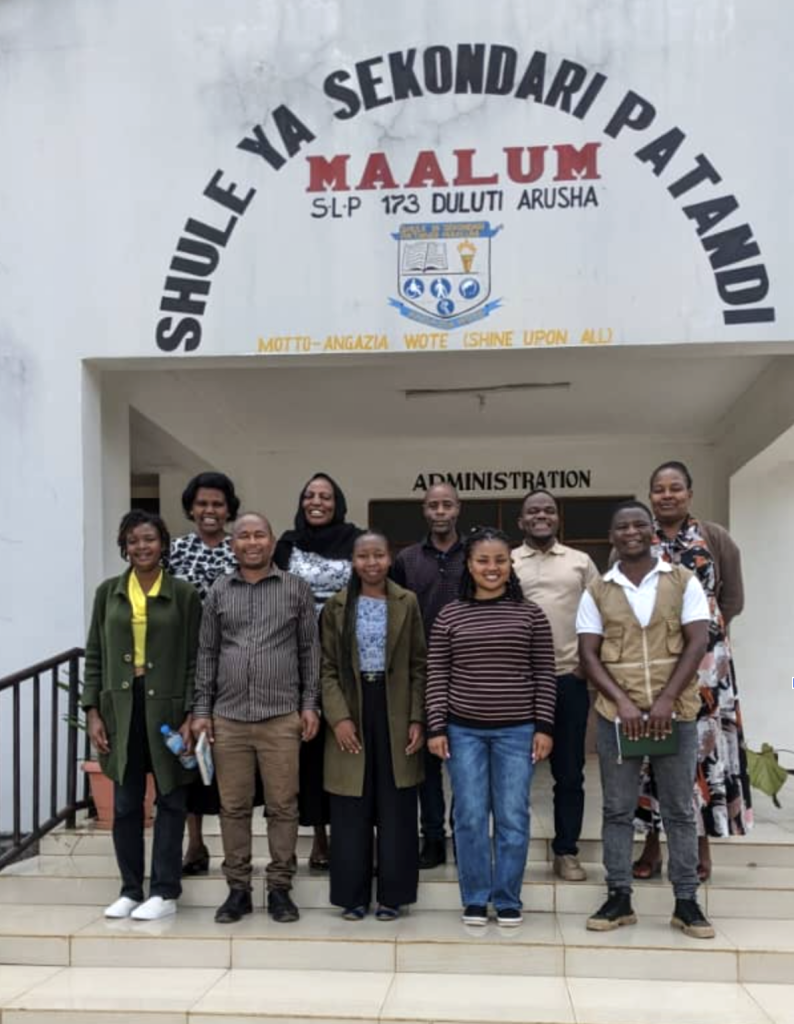
Warm thanks to everyone for the successful work carried out so far. The amount of work and expertise invested in developing the project has been enormous.
During the first year of the project, the school’s teachers and students received training in nutrition. A group of students was selected to carry out the practical work in the kitchen garden under the guidance of the teachers responsible for it. The students take part in cultivating the crops, planting seedlings, watering the plants and, now in August, harvesting the produce. Students were selected so that they can continue participating during the following school term and eventually train new students to take over their responsibilities.
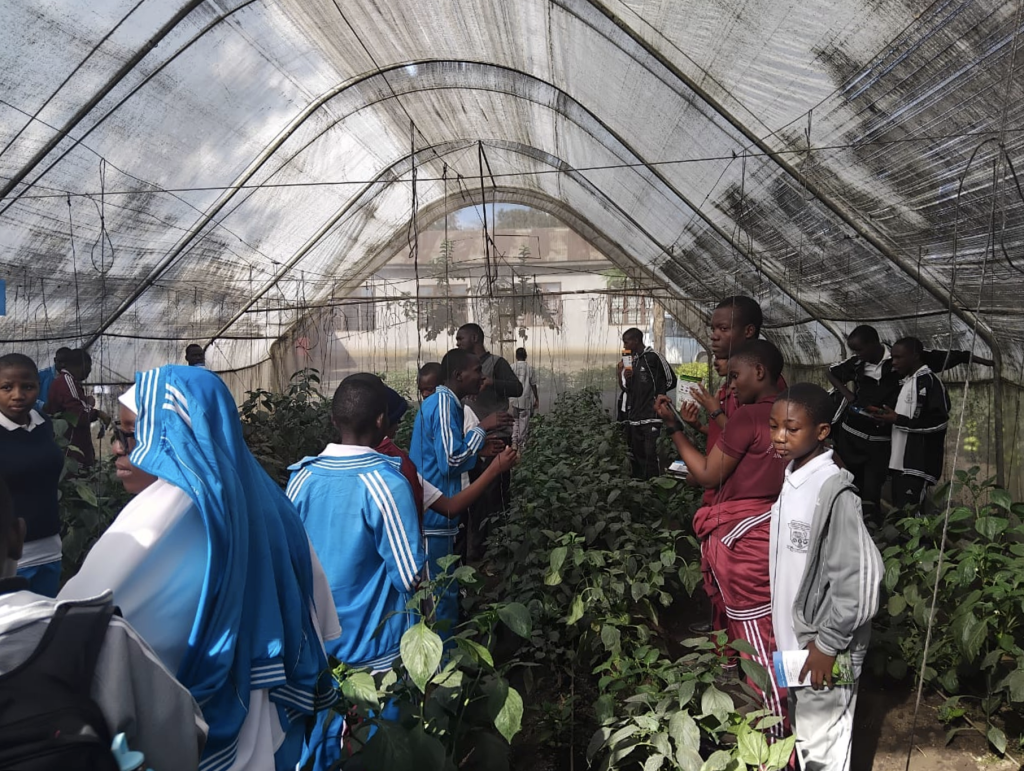
Study visits and excursions are particularly well suited to practical learning activities such as agriculture.
In August, Patandi students had an opportunity to visit the annual Nane Nane Agricultural Exhibition organised by TAHA in Arusha. During the visit, the students learned about the cultivation of different crops and saw practical examples of growing methods, including greenhouse cultivation. Travelling by bus to Arusha for the study visit also provided deaf students with a varied and practical learning experience.
Nane Nane means “eight eight” in Swahili, referring to 8 August, which is celebrated as Farmers’ Day throughout Tanzania.
Study visit to the Nane Nane Agricultural Exhibition in Arusha on Farmers’ Day, 8 August 2026.
Maintaining soil fertility and productivity over two growing seasons each year will be one of our future challenges. I have been considering how composting, ecological farming methods and the use of animal manure could be incorporated into the school garden. Our starting point is the hope that the project will continue to receive funding, allowing us to benefit from expert support and enabling the garden to provide Patandi students with more varied school meals for many years in a sustainable and environmentally responsible way.
The Arusha region in northern Tanzania allows for two growing seasons each year. The first, the long rainy growing season from approximately April to August (masika), is now behind us, and cultivation has been successful. The shorter growing season (vuli) begins in October, with the next harvest expected around February. We look forward with interest to seeing what will be growing at Patandi around the turn of the year.
A varied and nutritious school meal is not something that can be taken for granted in dry areas, and particularly not in remote communities. The students involved in the kitchen garden may also be able to use the skills they acquire later in their own lives, including in rural areas.
Filming and video editing: Mike Daniel Mghwira
Agriculture employs more than half of Tanzania’s population, and we hope that learning sustainable cultivation methods will ultimately benefit individual families as well. One of my hopes is that one of Patandi’s students with special educational needs may eventually find a profession in horticulture as their skills develop through the principle of learning by doing.
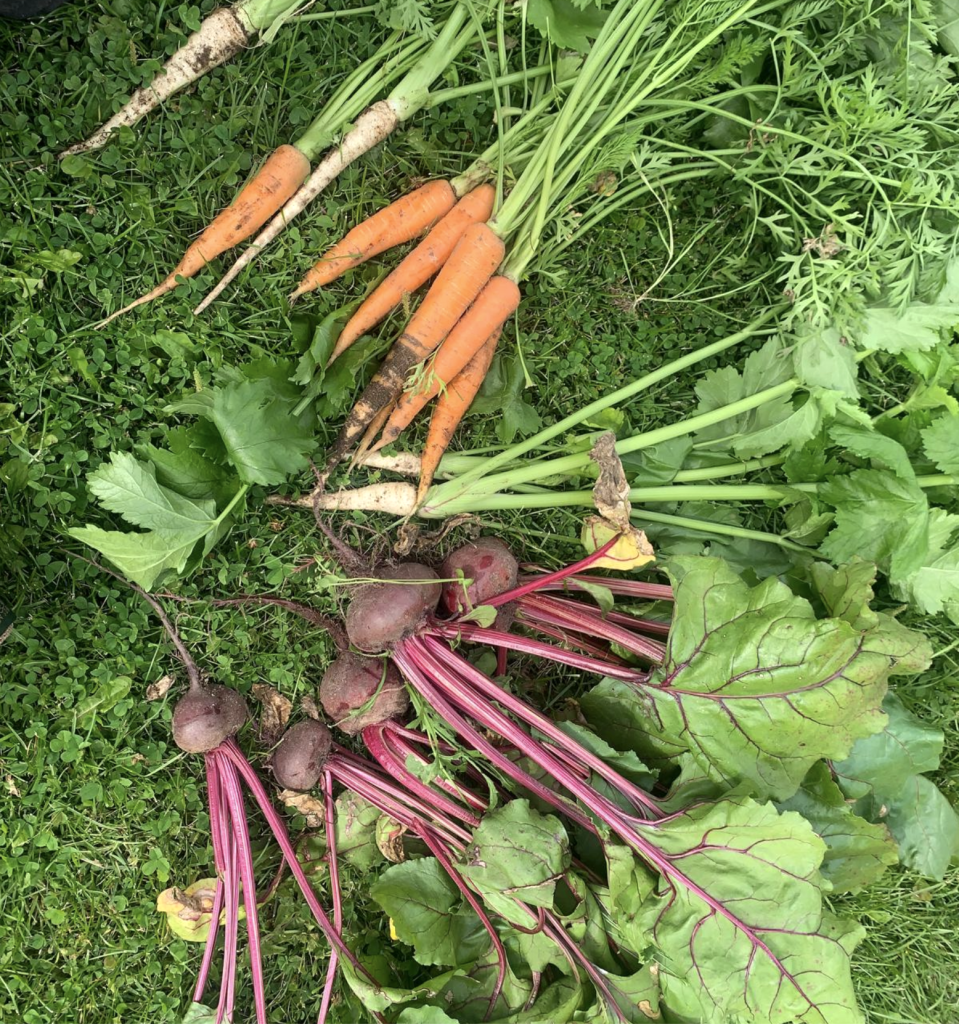
Tomorrow, I—a keen amateur gardener—will harvest my own carrots. This summer, the carrots in Patandi and Pihtipudas have grown at much the same pace.
Kirsi Ihalainen
Chairperson, FSE Finland
Amateur gardener and member of our project’s kitchen garden working group