International Day of Persons with Disabilities - update #12
“Now I am seen as one of the others” –
Finnish organisations promote the inclusion of persons with disabilities in Tanzania
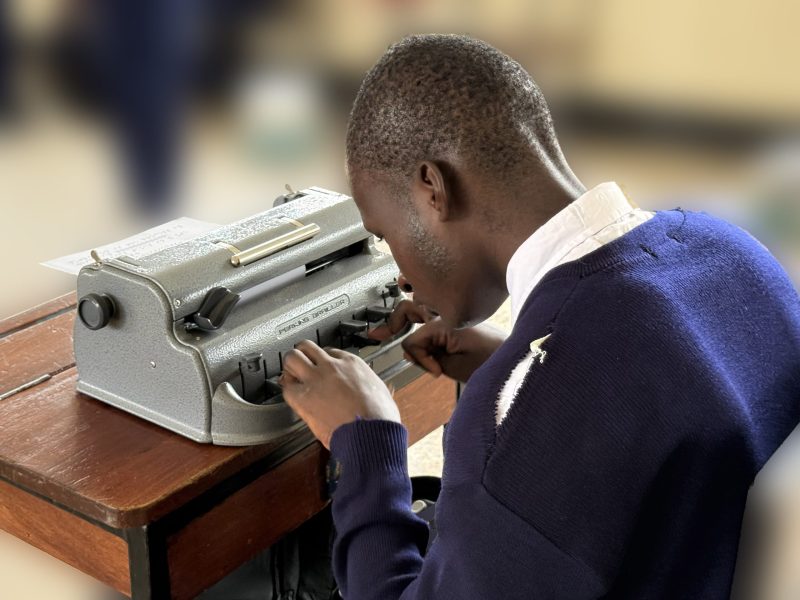
The International Day of Persons with Disabilities is observed on 3 December as a reminder that people with disabilities must be guaranteed full, dignified, and equal participation in society. For more than five million Tanzanians with disabilities, equality and inclusion are not distant goals. For them, it is about the practical possibility of going to school, getting a job, and accessing healthcare — the possibility of living a dignified life free from discrimination.
Efforts have been made in recent years to improve the situation of persons with disabilities in Tanzania through both national initiatives and international support. The country ratified the UN Convention on the Rights of Persons with Disabilities in 2009, and legislation safeguarding the rights of people with disabilities has been developed on its basis.
“However, the practical implementation of the Convention is still far from complete,” says Abilis’ country coordinator Rafiki Msafiri.
About half of all children with disabilities do not attend school, the employment rate of persons with disabilities is very low, and access to assistive devices and healthcare services is limited, especially in rural areas.
Economic exclusion, the weak participation of persons with disabilities and their organizations in decision-making, as well as negative attitudes and prejudice, continue to restrict the realization of their rights. As solutions, Rafiki Msafiri suggests incentives to promote the employment of persons with disabilities and increased investment in participation in decision-making, both within government structures and within disability organizations.
Finnish civil society organizations work together with their Tanzanian partners to change the situation across many areas of life.
According to Finland’s Ambassador to Tanzania, Theresa Zitting, Finnish civil society organizations carry out impactful and important work.
“Cooperation with local partners makes it possible to implement context-specific development cooperation in a way that responds concretely, for example, to many of the challenges of disability inclusion in Tanzania,” Zitting adds.
Work promoting sexual health services breaks stigmas
Organizations focus particularly on improving access to health services, especially sexual and reproductive health services. The aim is to reduce stigma, discrimination, and other barriers that make it difficult for people with disabilities to access services.
Services are not only difficult to obtain but also to target to the right people, as many do not even want to acknowledge their own or a family member’s disability. In particular, women with disabilities also face violence, which is rarely reported due to fear, shame, and the normalization of abuse.
For this reason, organizations strengthen the awareness of people with disabilities about their rights and provide training for health care professionals.
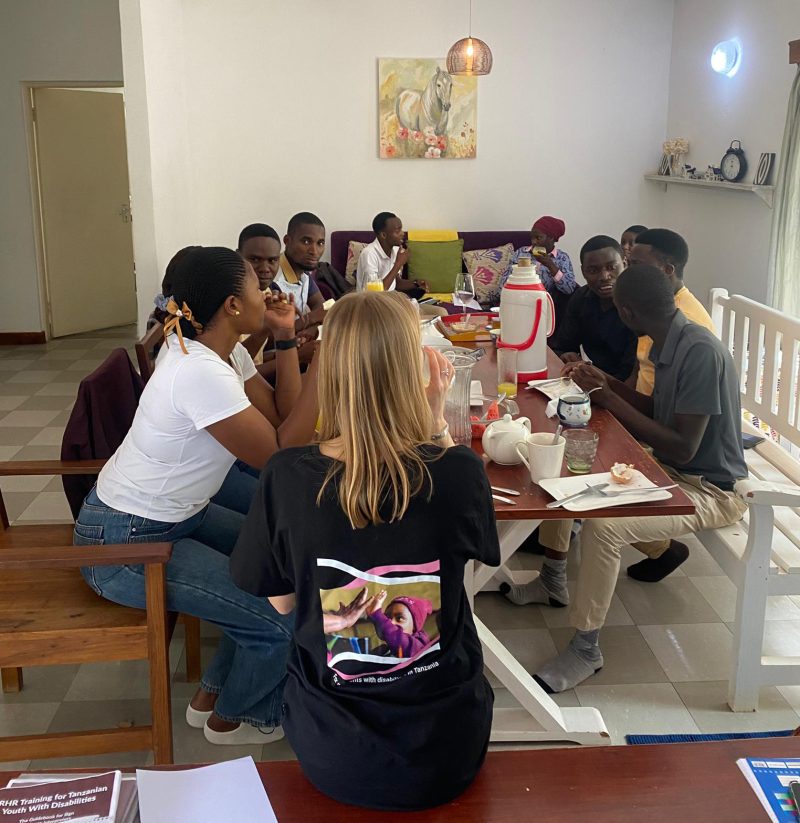
One example of this work is a handbook published by the Finnish Evangelical Lutheran Mission and Fida, together with their local partners, which compiles good practices for providing sexual and reproductive health services for women with disabilities. The handbook is the first of its kind in Tanzania and guides health care professionals to offer accessible and respectful services to women and girls with disabilities. It served as the foundation for a sexual health training conducted in November in Arusha by health care professionals Taika Wiikari and Jenni Katajarinne. As part of the FSE – Finnish Special Education in Africa, Arusha, Especially! project, sign language interpreters are being trained to guide deaf students in sexual health education.
ChatGPT said:
Rebeth Mdong’ala, Mafinga City Council’s coordinator for reproductive and child health, explains that for a long time many young people with disabilities were left outside sexual and reproductive health education and services. With the support of SOS Children’s Villages, a more inclusive environment has been created in which every young person, regardless of ability, can access accurate information and services. School visits and mobile health clinics have helped reach more young people with disabilities and provide them with the support they need. The experiences of the young people themselves also show the importance of this work. Christina describes the change in her own life:
“Before the sexual and reproductive health trainings, I was shy and didn’t know much about my body or my rights, nor did I know whom I could talk to about my concerns. Now I feel more confident making good decisions, and I can share what I’ve learned with my friends as well.”
Education belongs to everyone
Another focus of the work done by Finnish organizations is supporting the schooling of children and young people with disabilities. Because attitudes toward persons with disabilities are so negative in Tanzania, many parents do not even consider sending their child to school. For this reason, efforts to change attitudes are crucial.
The organizations also train teachers in the use of inclusive methods and support partner schools in building inclusive learning environments.
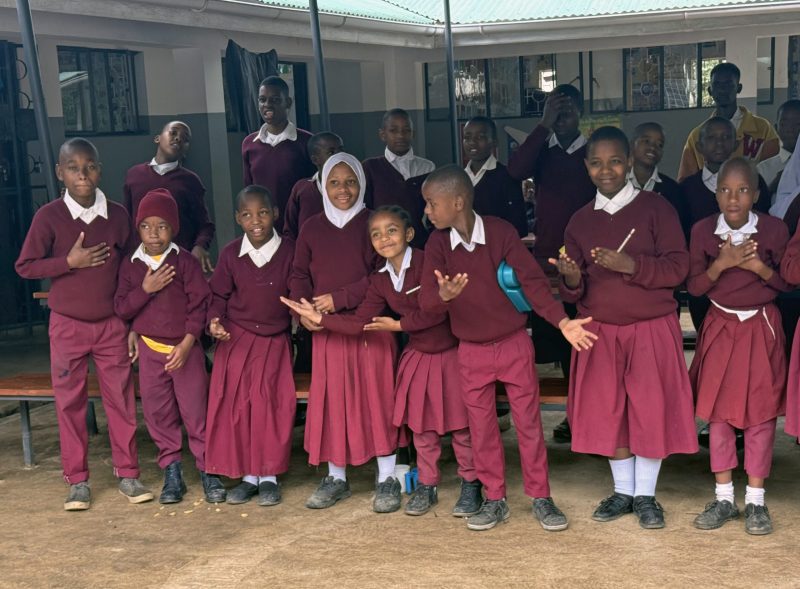
The work is gradually yielding results. In the Arusha region, thanks to the efforts of FSE – Finnish Special Education in Africa, an organization promoting education for deaf learners, school attendance among deaf children has increased, and improved teaching methods have led to significantly better learning outcomes. The most important result, however, has been a shift in attitudes both within educational institutions and in the surrounding society, as well as improved accessibility at the secondary level. Whereas deaf learners were previously viewed as less capable, they are now finally seen as equal to others.
Economic independence opens doors to inclusion
Although Tanzanian law requires medium and large companies to hire persons with disabilities, fewer than one percent of Tanzanians with disabilities hold formal employment. Barriers to employment include not only prejudice and discrimination but also the lack of education and assistive devices.
Finnish civil society organizations work to promote the economic independence of persons with disabilities. Training, income-generating opportunities, and support for starting businesses have improved their ability to earn a living for their families. As the economic contribution of persons with disabilities to their families and communities grows, they also become more accepted as full members of those communities.
“Before, others doubted my ability to support my family and viewed me with suspicion,” says Felix, who lost his leg in a motorcycle accident. After participating in training sessions run by the Finnish Deaconess Institute’s partner organization in Mufindi, Felix started his own business repairing mobile phones. “My business has done well. I have a family, and we live comfortably. The community’s attitude has changed too — now I’m seen as one of the others.”
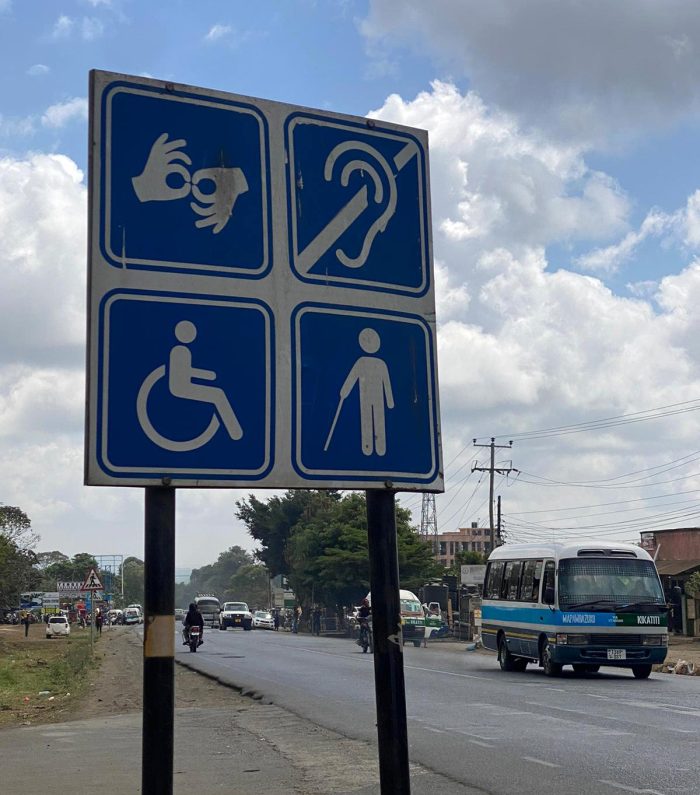
The network of Finnish development cooperation organizations in Tanzania promotes the rights and inclusion of persons with disabilities. Its work focuses on the economic independence of persons with disabilities, inclusive education, gender equality, and support for marginalized groups. Through collaboration, the organizations strengthen their impact, share resources, support local partners and civil society organizations, and reduce the stigma associated with disability. The goal is to build a more inclusive and just society in which the dignity and rights of persons with disabilities are fully realized. The network includes the Abilis Foundation, the Finnish Evangelical Lutheran Mission, Fida International, Finnish Special Education in Africa, the Finnish Deaconess Institute, SOS Children’s Villages, Disability Partnership Finland, and the Finnish Association on Intellectual and Developmental Disabilities.