Small stories from Arusha 8
About Educational Heroes and Other Memorable Moments
There’s still more to tell about Tanzania, even though our mentor training on digital technology for teachers of the deaf and hard of hearing ended a week ago. My travel companion and I decided to stay for another week — mostly as tourists, but also with a small connection to FSEA’s projects. I thought I’d use this blog post to reflect on and summarize the most important thoughts and moments from this nearly month-long journey.
Once again, the injustice of the world became painfully clear along the way. To those who have, more is given; and to those who have much, even more is given. And vice versa.
We visited, for example, a Maasai area and the Ngoswak Primary School near the Kenyan border. There are 759 pupils and 7 teachers, plus 2 volunteers. It was a good time of year: during the rainy season there’s water, and they are able to cook maize porridge for the students. In the dry, hot season, there’s no water — not for food, not even for drinking.
We spoke with the teachers, and their most heartfelt wish was to have water — their own well — so they could provide food for the pupils. Watching the line of students waiting to receive a cup of maize porridge brought tears to my eyes. If only we could bring them just one clean Finnish lake during the dry season!
Equality — A Nordic Luxury
Equality, as we understand it in Finland — or more broadly in the Nordic countries — is a privilege and an achievement worth holding on to. In many parts of the world, including Tanzania, various cultural factors still hinder the progress of gender equality.
We met a 15-year-old girl, already a wife, who was building herself a hut using a mixture of cow dung, sand, and clay. Her husband is expecting a second wife soon — the bride price has already been paid. One can assume the girls weren’t exactly asked if they were willing.
In my view, a teenage girl’s place is not as the wife of a man significantly older than her. She belongs in school, laughing and giggling with her peers, making friends, and simply being a teenager.
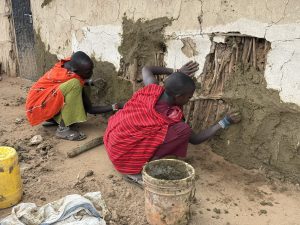
Education seems to be a rising trend — perhaps all around the world? At Ngoswak Primary School, I was surprised to see clearly older children among the primary school pupils. I was told they are there to learn how to read and write.
And even though there are children with disabilities begging on the streets of Arusha during school hours, and Maasai children herding cattle in the countryside, many parents still choose school for their children — if it’s at all possible.
The teachers at Ngoswak are true heroes of education. They make literacy possible even for children in remote areas. (The number of teachers in schools is determined by government decisions. No additional teachers have been assigned to this school.)
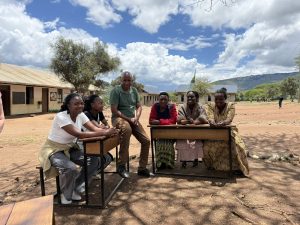
Photo: The four on the right are teachers from Ngoswak School, and the first person on the left is the project coordinator of the initiative, Nossim A. Mevoroo.
FSEA’s project to improve the education of deaf and hard-of-hearing children and youth is truly commendable — there’s no doubt about that.
It was a new and wonderful experience to see how communication between deaf and hearing people works through sign language (even my few signs brought some help and joy!). It really just takes a willingness to learn. Of course, sign language interpreters are essential when it comes to discussing more complex matters.
I’m still deeply impressed by how the mentors — secondary school subject teachers — were able to use sign language. In my spare time, I looked into the Finnish practice and noticed that in Finland too, deaf and hard-of-hearing students are placed in regular classrooms.
I also observed that sign language skills may be deteriorating, and the right to a sign language community is at risk of disappearing — which, of course, is a great loss.
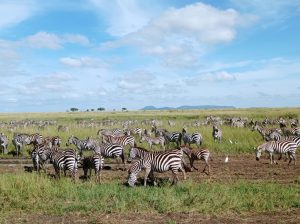
Photo: Zebras, zebras, zebras
Tanzania is a magnificent and beautiful country — and tourists have certainly taken notice. We visited Serengeti National Park (which, sadly, most Tanzanians cannot access due to poor and expensive transportation options), and the Serengeti was simply enchanting and awe-inspiring!
The savannah stretches on almost endlessly, and far off on the horizon, new hills appear. During the rainy season, the landscape is lush, with tall grasses growing in many places — perfect hiding spots for the animals.
At the time of our visit, the great migration of zebras and wildebeests was underway toward the northern part of the park — and there were truly thousands upon thousands of them. We also saw many types of antelope, herds of buffalo and elephants, giraffes, the obligatory lions, hippos, and even a couple of cheetahs.
It left me with a powerful feeling: we are merely visitors here — the animals are the true owners of this place.
Liisa Ilomäki
,